

Did you know over 90% of civil cases don’t go to court? The civil litigation process in the U.S. is complex. What happens behind the scenes of lawsuit resolution?
Civil cases are legal fights over money or actions. They involve people, businesses, or groups. Knowing how most cases settle helps us understand the legal system better.
Resolving civil lawsuits is not simple. Parties look for quick and cheap ways to solve their problems. They want to avoid long court battles.
Key Takeaways
- 90% of civil cases are resolved before reaching trial
- Multiple resolution strategies exist beyond traditional courtroom litigation
- Legal representation plays a critical role in settlement negotiations
- Cost and time are key factors in choosing settlement approaches
- Understanding civil litigation processes helps parties make informed decisions
Understanding Civil Cases
Civil litigation helps solve disputes without criminal charges. It uses the court system or other ways to fix legal problems. This process is key for resolving conflicts.
Civil cases are about getting money or actions from someone else. They are different from criminal cases, where the state can punish you.
Definition of Civil Cases
A civil case starts when someone says another person did something wrong. They want money or for the other person to do something. The main goal is not to punish but to fix the problem.
Types of Civil Cases
- Contract Disputes: Problems with agreements
- Personal Injury Claims: Getting money for injuries
- Property Disputes: Issues with land or things
- Employment Litigation: Legal problems at work
- Intellectual Property Cases: Protecting creative work
Importance of Civil Litigation
Civil litigation keeps society in order. It helps people and groups get justice and solve problems. It does this in a fair and clear way.
The legal system makes sure disputes are handled right. This helps everyone and keeps peace without fighting.
The Role of Legal Representation
Going through the civil litigation process needs smart planning and legal know-how. Lawyers are key in winning cases. They use their skills and knowledge to help a lot.
- Doing deep case reviews
- Finding strong and weak points in the case
- Coming up with smart negotiation plans
- Keeping clients’ rights safe
How Attorneys Influence Settlements
Lawyers make a big difference in how cases are settled. They use their legal knowledge to:
- Look at evidence carefully
- Guess how the case might end
- Talk well with the other side’s lawyers
- Suggest the best settlement options
The Benefits of Hiring a Lawyer
Getting a good lawyer has many benefits in civil cases. Legal professionals can make negotiations better and protect clients.
Benefits include less stress, help with complex legal stuff, and better chances of good settlements. Lawyers know how to get the most money for clients while keeping risks low.
The Civil Litigation Process
Going through the civil litigation process can be hard. It’s important to know the steps of civil court. This helps both sides get ready for legal fights.
The civil litigation process has many key steps. These steps turn a legal fight into a court decision. Each step needs careful planning and action.
Essential Steps in Civil Litigation
- Initial Complaint Filing: A formal document that states the plaintiff’s claims
- Defendant’s Response: An official answer or a counterclaim
- Discovery Phase: Collecting and sharing important evidence
- Pre-Trial Motions: Legal arguments before the trial
- Settlement Negotiations
- Trial Proceedings
- Potential Appeals
Typical Civil Case Timeline
| Stage | Estimated Duration |
|---|---|
| Complaint Filing | 1-2 Months |
| Discovery Process | 6-12 Months |
| Settlement Negotiations | 2-4 Months |
| Trial | 1-3 Weeks |
| Total Case Duration | 1-2 Years |
Knowing the civil litigation process helps people make smart legal choices. Each step has its own challenges and chances to solve disputes.
Pre-Trial Negotiations
Pre-trial negotiations are key in civil cases. They help solve disputes before court. These talks can save time, money, and stress for everyone.
Negotiation tactics are very important in civil cases. Lawyers prepare well and think strategically for these talks.
Importance of Negotiations
Good pre-trial talks have many benefits:
- Less legal costs
- Quicker case end
- More control over results
- Less emotional stress
Effective Negotiation Strategies
Lawyers use several tactics for good talks:
- Positional Bargaining: Start with a position and find a middle ground
- Interest-Based Negotiation: Talk about needs, not just demands
- Listen well and show empathy
- Show clear, solid evidence
Smart strategies help teams talk better. This makes finding a settlement more likely.
Alternative Dispute Resolution (ADR)
Civil lawsuits can be very complex and take a lot of time. Alternative dispute resolution methods are quick ways to solve legal problems outside of court. These methods give people more control and flexibility in solving their legal issues.
Mediation in civil cases is a strong alternative dispute resolution method. It lets people work together to find agreements. Unlike court, mediation is a place where both sides can talk openly about their worries.
Understanding Mediation
Mediation uses a neutral third-party to help talks between parties. The main goals are:
- Encouraging open communication
- Identifying shared interests
- Developing creative solutions
- Preserving relationships
Arbitration: Evaluating Advantages and Challenges
Arbitration is different from mediation because it’s more structured. A professional arbitrator looks at the evidence and makes a final decision. This can be quicker and cheaper than going to court.
Pros of arbitration include:
- Reduced legal expenses
- Faster resolution times
- Private proceedings
- More flexible scheduling
Potential downsides are limited appeal options and fewer formal protections than court trials.
Choosing the right alternative dispute resolution method depends on the case, the people involved, and what they want to achieve. Lawyers can help decide the best way to solve civil disputes quickly.
The Role of Discovery

The discovery phase is key in civil lawsuits. It’s a way for both sides to share important info before court. This helps them see what they have and what they might be up against.
Understanding Discovery in Legal Proceedings
Discovery is a big part of solving lawsuits. It lets lawyers get the evidence they need. They can ask for documents, write questions, and even interview people to find out what’s important.
Key Elements of the Discovery Process
- Interrogatories: Written questions that must be answered under oath
- Document Requests: Formal demands for relevant paperwork and records
- Depositions: Oral testimonies taken under oath from witnesses and parties
- Physical Evidence Examination: Inspection of tangible items related to the case
There are many ways to gather info in discovery. Each method is used to find important facts that could change the outcome of the lawsuit.
| Discovery Method | Purpose | Key Characteristics |
|---|---|---|
| Interrogatories | Gather written information | Formal written questions requiring detailed responses |
| Document Requests | Obtain physical evidence | Comprehensive review of relevant documentation |
| Depositions | Collect oral testimony | Face-to-face interviews under oath |
Lawyers see discovery as a powerful tool. It can help in talks about settling the case. By sharing important info, it helps both sides see what they really have and what risks they face.
Settlement Discussions
Settlement talks are key in solving most civil cases. They start early in the legal process. This gives both sides a chance to settle without going to court.
To understand out-of-court settlements, you need to know about legal talks. People talk to settle to avoid big costs and get things done fast.
When Do Settlements Typically Occur?
Settlements can happen at different times:
- Before a lawsuit is filed
- During the first steps of the case
- After gathering all the evidence
- Just before the trial starts
- Even while the case is being tried
Factors Influencing Settlement Offers
Many things affect settlement talks:
- How strong the case is
- Costs of the lawsuit
- Chances of winning at trial
- How much money each side has
- The time and effort needed
Good settlement talks need careful planning and knowing the law well. Lawyers are very important in these talks. They help find solutions that both sides can agree on.
The Impact of Trial
Civil court cases can be very complex. Trials are a key moment in solving these cases. Going to trial means big changes for everyone involved.
Trials can lead to many different results. Knowing these outcomes is key to making good legal plans.
Potential Trial Outcomes
- Complete victory for the plaintiff
- Partial judgment in favor of either party
- Total dismissal of the case
- Judgment requiring specific actions or compensation
Factors Influencing Settlement Decisions
The idea of a trial can change how people talk about settling. Important things to think about include:
- Financial risks associated with litigation
- Potential legal expenses
- Uncertainty of judicial outcomes
- Time investment required for trial preparation
Getting ready for a trial can show important things. Lawyers look at the good and bad of each case. This might make people think about settling differently.
Good plans for lawsuits need to think about trial chances. People must think about the good and bad of going to trial. They need to think about the long legal fight and the judge’s decision.
Legal and Financial Considerations
Going through civil litigation is complex and costly. It’s key to avoid high costs for both sides in a lawsuit.
Strategies for solving lawsuits often focus on money. The costs of civil cases go beyond just lawyer fees and court costs.
Breaking Down Litigation Expenses
- Attorney hourly rates are $200 to $500
- Court filing fees are over $500 per document
- Expert witness costs $2,000 to $5,000 a day
- More money for depositions and research
Financial Risk Assessment
Everyone must look closely at possible financial outcomes. The costs of lawsuits can grow fast, often more than the original issue. Good legal plans aim to lower costs and get a good outcome.
When thinking about settling, consider both immediate and future costs. Look at:
- Time costs of being in court
- Damage to work or business relationships
- Emotional and mental stress
- Uncertainty of trial results
Strategic Financial Decision-Making
To avoid high costs, start negotiating early and know your limits. Plans that save money can lead to fair settlements for both sides.
The Importance of Documentation
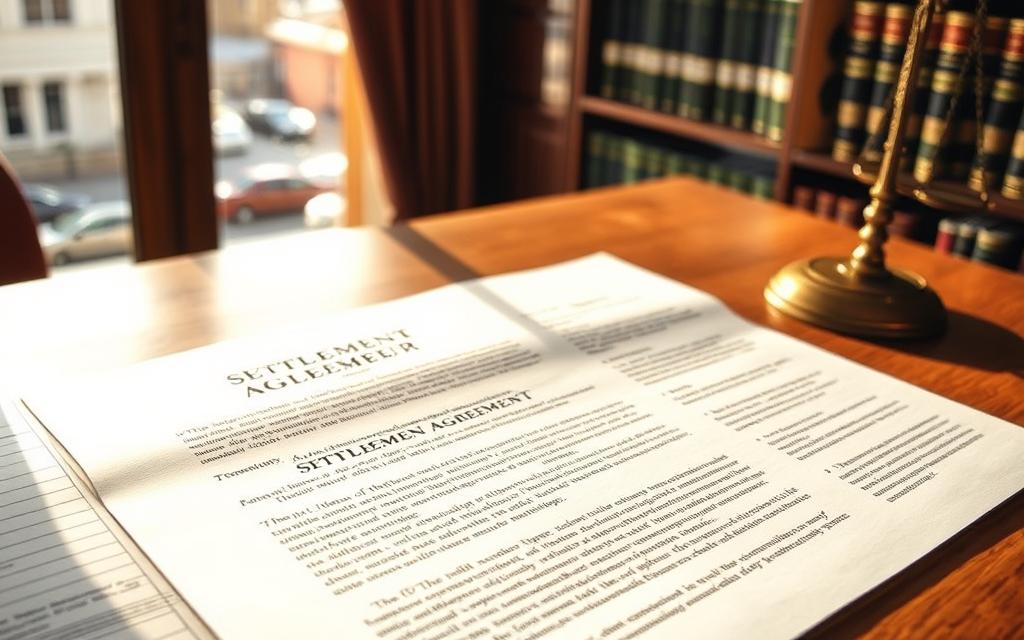
Documentation is key in the civil litigation process. It’s the heart of settlement agreements. Keeping good records can help avoid future problems.
When dealing with settlement agreements, it’s important to know what documents are needed. These documents help protect everyone’s rights. They make sure the legal side is covered well.
Necessary Documents for Settlement
Important documents for settlement include:
- Formal settlement agreement
- Release of liability forms
- Detailed evidence supporting the claim
- Signed acknowledgment from all parties
- Financial documentation of damages or compensation
How Documentation Affects Agreements
The quality of documents matters a lot. Meticulously prepared documents help avoid confusion. They make sure everyone knows what’s agreed upon.
For good documentation, consider these:
- Use clear and precise language
- Make sure all parties are clearly identified
- Include all settlement terms
- Get signatures and notarization
Legal experts say to keep all records well-organized. Keep both digital and physical copies safe. This protects everyone’s rights and helps with any future questions.
Emotional Factors in Settlements
Going through civil lawsuits is more than just law. Feelings play a big part in how cases are settled. They guide decisions that go beyond just law.
When we talk about settling lawsuits, feelings matter a lot. They can change how talks go. Knowing about these feelings is key for fair settlements.
The Psychological Toll of Litigation
Civil cases can really stress people out. The wait, money worries, and personal stakes make it tough. These feelings affect how people decide to settle.
- Anxiety about trial results
- Feeling tired from long legal fights
- Worrying about judges’ decisions
Emotional Influences on Negotiation Dynamics
Feelings can really change how we talk things out. How much we settle for emotional shows the real impact of the issue.
Good negotiators know feelings are as important as law. They need to understand their own feelings and plan wisely.
Strategies for Emotional Management
- Stay calm and clear
- Get help from experts
- Think about the big picture
- Use ways to reduce stress
By facing and handling feelings, we can find better ways to settle lawsuits. This leads to agreements that work for everyone.
Finalizing the Settlement
Getting to the end of a legal fight means going through settlement deals and out-of-court agreements. It’s all about paying close attention and planning well to solve everything.

When we’re almost done with a settlement, we have to do a few important things. This makes sure everyone’s okay. The steps are:
- Drafting a detailed settlement agreement that covers everything
- Going over the document carefully
- Getting okay from everyone involved
- Checking if it’s legal and fair
Critical Components of Settlement Agreements
Settlement agreements need clear language and clear rules. Legal documents must talk about important things like:
- How much money will be paid
- Letting go of future claims
- Keeping things private
- What each side has to do
Legal Implications of Settlements
Settlements have big legal effects. Once signed, they stop any more lawsuits. It’s important to think about the future before agreeing to anything.
Lawyers help a lot during this time. They make sure the deal is fair, complete, and can be enforced.
Conclusion
Going through the civil litigation process needs smart planning and knowing all the steps. Most cases are solved without going to court. This shows how good alternative ways to solve problems are.
Settlements help people solve legal issues in a smart way. They save money and emotional stress. This is why many cases are settled instead of going to trial.
So, how do most civil cases get settled? It’s through talking, mediation, and having a good lawyer. The legal process helps people find fair solutions without long court fights. Lawyers help by guiding, looking at possible results, and planning how to settle.
Key Insights on Settlements
Understanding civil case settlements is complex. It involves looking at money, risks, and future effects. Lawyers are key in helping decide on settlements and protecting what’s important.
Moving Forward
After settling, it’s important to follow all the agreed-upon rules. Each settlement is a chance to solve problems quickly and avoid more legal trouble. Getting legal advice is key to making sure everything goes right with the settlement.