
Can a marriage end without hurting our feelings and money? To avoid a bad divorce, we need smart planning, understanding emotions, and wanting to split up nicely.
Divorce doesn’t have to be a fight. Studies show couples who work together can save a lot of money and stay mentally strong. Knowing how to do this can make ending a marriage respectful and healing.
This guide will show you how to stay dignified, reduce fights, and end a marriage well. You’ll learn about talking things out, managing money, and more. These steps will help you go through divorce with kindness and understanding.
Key Takeaways
- Prioritize open and respectful communication
- Seek professional mediation when needed
- Focus on collaborative problem-solving
- Protect children’s emotional well-being
- Develop a comprehensive financial plan
- Maintain personal emotional health
- Consider long-term relationships and co-parenting
Understanding Divorce and Its Impact
Divorce is more than just legal papers. It changes a person’s life in big ways. It affects their feelings, money, and how they fit into society.
Emotional Consequences of Divorce
Going through divorce needs a lot of emotional help. People going through it often feel many strong feelings. These can include:
- Grief and loss of primary relationship
- Increased anxiety and depression
- Potential reduction in self-esteem
- Heightened stress levels
Financial Implications of Divorce
Divorce can also hurt your wallet. It can make money problems last a long time. Knowing about these money changes is key to planning ahead.
| Financial Aspect | Potential Impact |
|---|---|
| Asset Division | 50-60% reduction in personal wealth |
| Income Adjustment | 20-30% decrease in household income |
| Legal Expenses | $15,000-$30,000 average cost |
Societal Perceptions of Divorce
Views on divorce have changed a lot. Now, people get more support and understanding. This makes it easier for those going through divorce.
There are now services to help with divorce. They offer support and advice to make the process easier.
Recognizing the Signs of a Troubled Marriage
Every relationship faces challenges. But some signs show deeper problems that need quick action. Knowing these signs can help couples fix issues or decide on their future.
Experts say spotting problems early is key. It helps couples get help through counseling or divorce strategies.
Communication Breakdowns
Good communication is vital in any relationship. When partners stop sharing, it’s a big issue. Look out for:
- Frequent arguments with no end
- Avoiding deep talks
- Being dismissive or defensive
- Using silence to communicate
Lack of Intimacy
Intimacy is more than just physical. Feeling emotionally apart shows in:
- Less physical touch
- Not spending quality time
- Feeling distant emotionally
- Not sharing experiences
Financial Conflicts
Money issues can hurt a relationship. Disagreements often happen when:
- Spending habits don’t match
- Secret financial choices are made
- Contributions to finances are uneven
- Financial goals differ
Seeing these signs early can help. Couples can seek counseling or look into divorce options. Getting help can offer ways to solve problems together.
Importance of Open Communication
Going through a divorce is complex. But, talking openly is key to avoiding a messy split. Lawyers see how talking well can make separations easier.
Techniques for Effective Communication
Learning to talk well during a divorce is important. It helps avoid fights and helps both sides understand each other. Couples should talk clearly and with respect.
- Use I statements to express feelings without blame
- Stay calm and avoid emotional triggers
- Focus on shared goals, like taking care of kids
- Communicate with empathy and respect
Active Listening Strategies
Listening well is key to avoiding a bad divorce. It means really getting what your partner is saying.
- Maintain eye contact
- Reflect back what you’ve heard
- Ask clarifying questions
- Suspend judgment
The Role of Honesty in Dialogue
Being honest can really help during a divorce. Lawyers say honesty builds trust and makes talks easier. When both sides are open and respectful, they can part ways with less stress.
Seeking Professional Help
Going through a divorce is hard. Marriage counseling is a big help for couples facing problems. It gives emotional support to help manage stress and keep your mind healthy.

Benefits of Marriage Counseling
Marriage counseling has many good points for couples thinking about divorce:
- It helps you talk better
- It gives a fresh view of your relationship
- It offers emotional support during tough times
- It teaches ways to solve conflicts
Finding the Right Therapist
Finding the right counselor is important. Look for someone with special training in divorce and relationships. They should have:
- A degree in clinical psychology or counseling
- Training in how relationships work
- Experience with divorce emotions
- Good communication and empathy skills
Recognizing When to Seek Help
Some signs show you might need counseling. Big communication problems, constant fights, and feeling far apart are big signs. If you’re struggling for a long time, getting help is a good idea.
Getting professional help can make divorce better. Counseling helps you understand your feelings, talk better, and make smart choices about your future.
Setting Boundaries
Going through a divorce needs careful handling of emotions and smart talking. It’s key to set clear limits to keep respect and cut down on fights during this hard time.
Defining Personal Space in Relationships
Setting personal boundaries is important for keeping your feelings safe during a friendly split. It means setting up rules that let both sides keep their pride and grow.
- Communicate clear expectations
- Respect individual privacy
- Establish communication protocols
- Define shared and personal responsibilities
Creating Mutual Agreements
A friendly divorce needs open talks and understanding from both sides. Making deals that cover possible issues can help avoid future mix-ups.
- Schedule regular check-ins
- Document shared decisions
- Remain flexible
- Prioritize children’s needs
Handling Conflicts Respectfully
Dealing with fights in a divorce needs smart feelings and a wish for peace. Listening well and solving problems with kindness can turn bad talks into good ones.
Experts say to solve problems with a goal to find solutions. This way, we can avoid hurting feelings and find common ground.
Preparing for a Constructive Conversation
Going through a divorce needs careful talking. How do you make it not ugly? It’s all about planning and knowing how to feel. Talking things out with a mediator can make hard talks easier.
Talking well during a divorce takes a lot of thought. Good couples plan their hard talks carefully. They do it with kindness and respect.
Timing and Environment Considerations
It’s important to pick the right time to talk. Look for a moment when:
- Everyone is calm and not upset
- There are no distractions
- Both are ready to listen and talk
Crafting Your Message
When you’re ready to talk about divorce, your words should be:
- Clear and to the point
- Kind and caring
- Looking for ways to work together
Anticipating Reactions
Experts say to know how people might feel. Get ready for different feelings. Listen well and stay calm during the talk.
The aim is not to argue but to understand each other. We want to find a way forward that hurts less.
The Role of Mediation in Divorce
Going through a divorce can be tough on your heart and wallet. Mediation is a better way than fighting in court. It lets couples work together to end their marriage.
Understanding the Mediation Process
Mediation uses a neutral person to help couples solve problems. Divorce attorneys suggest it because it’s less harsh than court battles.
- Reduces emotional stress
- Minimizes court involvement
- Provides a more flexible resolution process
Selecting the Right Mediator
Finding the right mediator is key. Look for someone with the right skills and experience in family law.
| Mediator Qualification | Importance |
|---|---|
| Legal Background | Ensures understanding of legal complexities |
| Communication Skills | Facilitates productive discussions |
| Conflict Resolution Experience | Helps navigate emotional challenges |
Benefits of Mediation
Mediation is cheaper and quicker than court fights. It lets couples control their divorce and avoid big arguments.
- Faster resolution times
- Lower legal expenses
- Greater privacy
- More personalized agreements
Choosing mediation makes divorce less stressful and more respectful for both sides.
Developing a Parenting Plan
Going through a divorce with kids needs a careful plan. This plan helps kids adjust to new family life. When parents stay friendly, kids feel better.
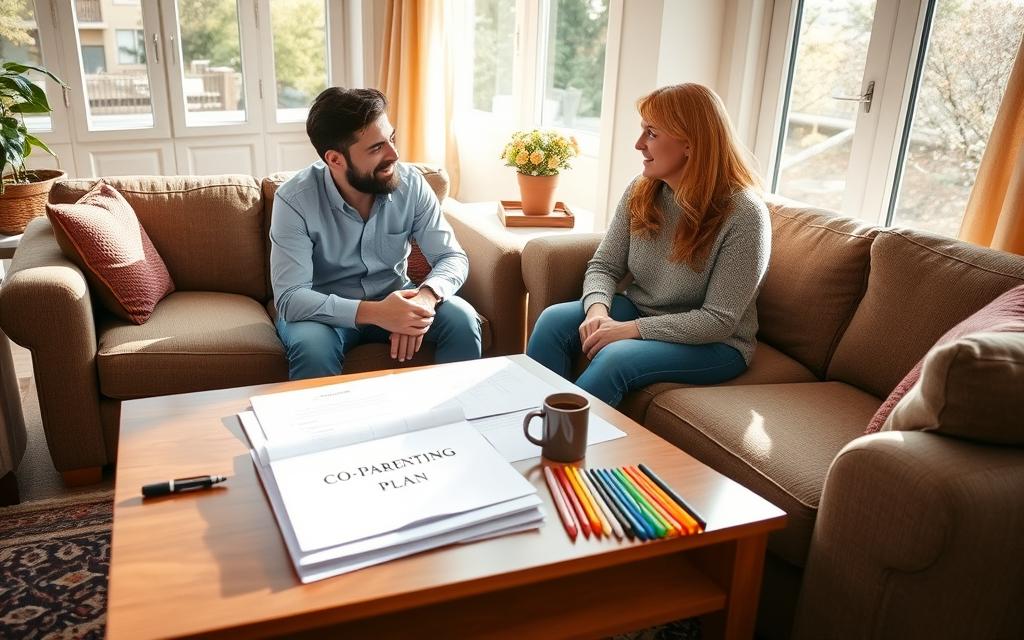
Creating a good co-parenting plan takes thought. Kids do well when parents talk clearly and respect each other, even if they’re not together.
The Importance of Cooperative Co-Parenting
Studies show kids adjust better when parents work together. A good co-parenting plan gives kids stability and safety during tough times.
- Minimize conflict between parents
- Maintain consistent routines
- Support children’s emotional needs
- Ensure open communication channels
Key Components of a Comprehensive Parenting Plan
| Element | Detailed Considerations |
|---|---|
| Custody Arrangements | Defining primary residence, visitation schedules, and holiday sharing |
| Decision-Making Process | Establishing protocols for educational, medical, and personal decisions |
| Financial Responsibilities | Outlining child support and shared expenses |
Keeping Children’s Best Interests at the Forefront
An effective co-parenting plan is more than just rules. It needs emotional smarts, flexibility, and a shared goal to make kids happy and grow.
- Maintain respectful communication
- Shield children from adult conflicts
- Be consistent with rules and expectations
- Encourage positive relationships with both parents
By focusing on kids’ emotional health during a friendly split, you make a caring space. This lets them do well, even with big family changes.
Financial Planning for Divorce
Going through a divorce means you need a good plan for money. Lawyers say it’s key to know about money before, during, and after the split.
Understanding Asset Division
Dividing assets is very tricky in a divorce. You and your partner must look at all your money together. This includes:
- Real estate properties
- Retirement accounts
- Investment portfolios
- Business interests
- Personal savings
Getting help from experienced divorce lawyers is a good idea. They can help make sure things are fair.
Developing a Post-Divorce Budget
After a divorce, you need a solid financial plan. Here’s what to do:
- Check your income
- Think about new expenses
- Save for emergencies
- Update your long-term goals
Importance of Independent Financial Advice
Getting advice from a pro is very important. A divorce financial advisor can:
- Help with tough money situations
- Look out for taxes
- Keep your money safe
- Help you plan for the future
Being proactive with your finances can help you feel more secure during a divorce.
Managing Emotions During Divorce
Divorce is very hard on your feelings. It can make even strong people feel overwhelmed. It’s important to know how to handle these feelings to avoid a bad divorce and stay well.
Coping Strategies for Emotional Resilience
It’s vital to have good ways to cope with your feelings during this tough time. Research shows some great ways to deal with divorce emotions:
- Practice mindfulness meditation to reduce stress
- Journal your thoughts and feelings regularly
- Engage in physical exercise to release emotional tension
- Set realistic expectations for your emotional recovery
Building Your Support Network
Having a strong support system helps a lot with healing. Talk to friends, family, or a counselor who can offer emotional support during this hard time.
Self-Care Practices for Emotional Healing
Self-care is not selfish—it’s necessary. Do things every day that help your mind and body:
- Maintain a consistent sleep schedule
- Eat nutritious, balanced meals
- Practice stress-reduction techniques
- Limit negative interactions
Remember, it takes time to manage your feelings during divorce. Be kind to yourself and know healing is a journey. By focusing on emotional support and growth, you can get through this tough time.
Building a Support Network
Going through a divorce is tough. You need more than just legal help. Emotional support is key during this time. People with strong support systems often have a smoother divorce and stay mentally healthy.
Friends and Family as Anchors
Your closest friends and family are very important. They give you:
- Non-judgmental listening
- Practical help
- Emotional comfort
- Help seeing things differently when it’s hard
Professional Support Groups
Being part of divorce support groups can really help. You can deal with tough emotions with others who get it. These groups are places for healing and growing.
| Support Group Type | Benefits | Recommended Frequency |
|---|---|---|
| Local In-Person Groups | Direct interaction, immediate connection | Weekly |
| Online Communities | Flexible scheduling, wider reach | As needed |
| Professional Counseling Groups | Guided emotional processing | Bi-weekly |
Digital Resources and Communities
Online places offer support for those going through divorce. Digital communities offer privacy and a way to connect. They help people deal with divorce in a positive way.
- Reddit divorce support forums
- Specialized Facebook groups
- Professional counseling websites
Having a wide support network helps you face divorce with strength. It brings hope for a better future.
Moving Forward After Divorce
Starting over after a divorce takes courage and planning. It’s a tough journey, but it can also help you grow. You can learn a lot about yourself.

Living alone means finding new ways to see the world. Studies show that those who focus on growing after a divorce do better in the long run.
Adjusting to Single Life
Adapting to being single needs both practical and emotional steps. Here are some important ones:
- Start new daily routines
- Learn to manage money on your own
- Make time for finding out who you are
- Be kind to yourself when things get tough
Rebuilding Social Connections
Building new friendships is key to moving on from a divorce. Here are some ways to do it:
- Reach out to friends you’ve lost touch with
- Join groups for support
- Find groups based on hobbies you enjoy
- Go to events where you can meet new people
Setting Future Relationship Goals
Thinking about past relationships helps you make better choices in the future. Here are some steps to take:
| Personal Growth Area | Potential Goals |
|---|---|
| Emotional Intelligence | Work on talking better |
| Self-Understanding | Learn about your relationship patterns |
| Relationship Expectations | Know what you want in a relationship |
Your life after divorce is a chance to start fresh. With purpose and kindness to yourself, you can find a happy and real path ahead.
Conclusion: Embracing a Positive Path
Divorce is a big change that can help us grow and become stronger. Studies show that those who handle it well can live better after it’s over.
Going through a divorce makes us learn more about ourselves. We can talk better, get help when we need it, and keep things respectful. This helps us get through it with pride and kindness.
Healing is key after a divorce. We learn a lot about ourselves and what we need. These lessons help us find new happiness and better relationships in the future.
Divorce doesn’t mean we’re not worth anything. By focusing on growing and healing, we can start fresh. An amicable divorce can lead to a happier, more fulfilling life.